Masala Tea: What It Is, How to Make It & Benefits
Masala tea, also called masala chai, is a traditional Indian spiced milk tea made by simmering black tea leaves with aromatic spices — primarily cardamom, ginger, cinnamon, cloves, and black pepper — along with whole milk and a sweetener. It contains moderate caffeine from its black tea base and is beloved for its bold, warming, deeply layered flavor. It can be prepared from whole fresh spices or a quality pre-made chai masala powder.
Introduction
Walk through almost any household in India — or an increasing number of cafes, kitchens, and morning routines across the United States — and you’ll encounter the unmistakable aroma of masala tea. That rich, spiced fragrance carries cardamom, ginger, and cinnamon all at once. It signals something deeply familiar to hundreds of millions of people: a cup of something comforting, energizing, and rooted in tradition.
Masala tea has crossed borders and cultures without losing its essential character. American interest in authentic Indian chai has grown steadily in recent years, with home brewers, wellness communities, and everyday tea drinkers searching for reliable recipes, quality spice blends, and honest answers about what’s actually in their cup.
But alongside that growing interest comes genuine confusion. What exactly is masala chai? Is it the same as the sweetened “chai tea latte” from a coffee shop? What spices go in it, in what quantities, and in what order? How much caffeine does it actually contain? Is it safe to drink every day?
This guide answers every one of those questions — clearly, accurately, and practically. Whether you’re a complete beginner who has never brewed Indian spiced tea, or an experienced chai enthusiast looking to refine your home recipe, you will find everything you need here. That includes a reliable step-by-step authentic masala chai recipe, a homemade chai masala powder recipe, an honest caffeine breakdown, evidence-based health information, and practical troubleshooting for common brewing mistakes.
Let’s begin with the most fundamental question.
What Is Masala Tea?
Masala tea — more precisely and traditionally called masala chai — is a spiced milk tea that originated on the Indian subcontinent. The word masala means spice blend in Hindi and Urdu. The word chai simply means tea. So the phrase “chai tea,” widely used in the West, is technically redundant — it translates to “tea tea.” And “masala chai tea” means “spiced tea tea.” Understanding this removes a surprising amount of confusion.
At its foundation, masala chai is black tea brewed together with a combination of warming whole spices, whole milk, and sugar or jaggery. The result is a bold, creamy, aromatic beverage with layers of flavor — sweet from the milk, bitter from the black tea, spiced from the chai masala, and warming from ginger and pepper.
Masala tea is not an herbal tea. It contains black tea leaves and therefore contains caffeine. It is also not the same as a coffeehouse chai latte, which typically uses a pre-made sugary syrup concentrate rather than freshly brewed spiced tea. The difference in flavor complexity between the two is substantial.
Quick Definition:
Masala Tea (Masala Chai): A traditional Indian spiced milk tea brewed by simmering black tea leaves, aromatic whole spices (cardamom, ginger, cinnamon, cloves, black pepper), whole milk, and sweetener together on the stovetop. It is one of the most widely consumed beverages in the world and an integral part of Indian daily life and food culture.
At a glance:
| Attribute | Detail |
|---|---|
| Also known as | Masala chai, Indian spiced tea, chai masala tea |
| Origin | Indian subcontinent (India, Pakistan, Nepal) |
| Base | Black tea — typically Assam CTC |
| Defining element | Chai masala spice blend |
| Liquid | Whole milk + water, simmered together |
| Sweetener | Sugar or jaggery |
| Caffeine | Yes — moderate (40–70 mg per 8 oz cup) |
| Flavor | Bold, warming, spiced, creamy, mildly sweet |
Masala Tea vs. Regular Chai vs. Chai Latte: Key Differences
This is one of the most commonly searched comparisons — and one of the most poorly answered in competing content. Here is a clear, complete breakdown.
Comparison Table
| Feature | Masala Chai | Regular Chai (Plain Milk Tea) | Chai Latte (Coffeehouse Style) |
|---|---|---|---|
| Base | Assam CTC black tea | Black tea | Chai concentrate or spice syrup |
| Spices | Multiple — cardamom, ginger, cinnamon, cloves, pepper | None, or very minimal | Pre-made spiced syrup |
| Milk | Whole milk, simmered with tea | Whole milk, simmered with tea | Steamed milk, added separately |
| Sweetener | Sugar or jaggery | Sugar | Sugar syrup (often very sweet) |
| Caffeine | ~40–70 mg per 8 oz | ~40–70 mg per 8 oz | Varies widely |
| Preparation | Stovetop, simmered 8–12 minutes | Stovetop, simmered 5–8 minutes | Espresso machine or cold concentrate mix |
| Origin | India — traditional household recipe | India — traditional household recipe | Western coffee shop adaptation |
| Flavor profile | Spiced, warming, layered, complex | Mild, milky, straightforward | Sweet, lightly spiced, often one-dimensional |
| Authenticity | Traditional | Traditional | Commercially adapted |
| Calorie range | 80–120 per cup (standard recipe) | 60–90 per cup | 150–250 per cup |
The bottom line on masala chai vs. chai: The difference is entirely the spice blend. A plain cup of Indian milk tea uses only black tea and milk. Masala chai adds a carefully balanced mix of spices — and that blend is what gives masala tea its identity, its aroma, and its cultural significance.
Masala Chai Spices — What Goes In and Exactly Why
Most online recipes list masala chai spices without explaining what each one actually contributes to the cup. That’s a problem — because understanding the role of each spice lets you adjust the recipe intelligently rather than guessing.
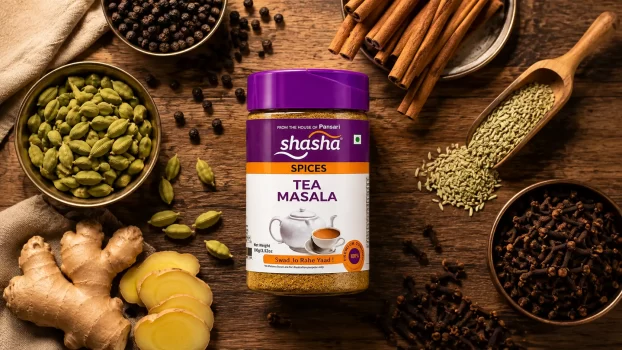
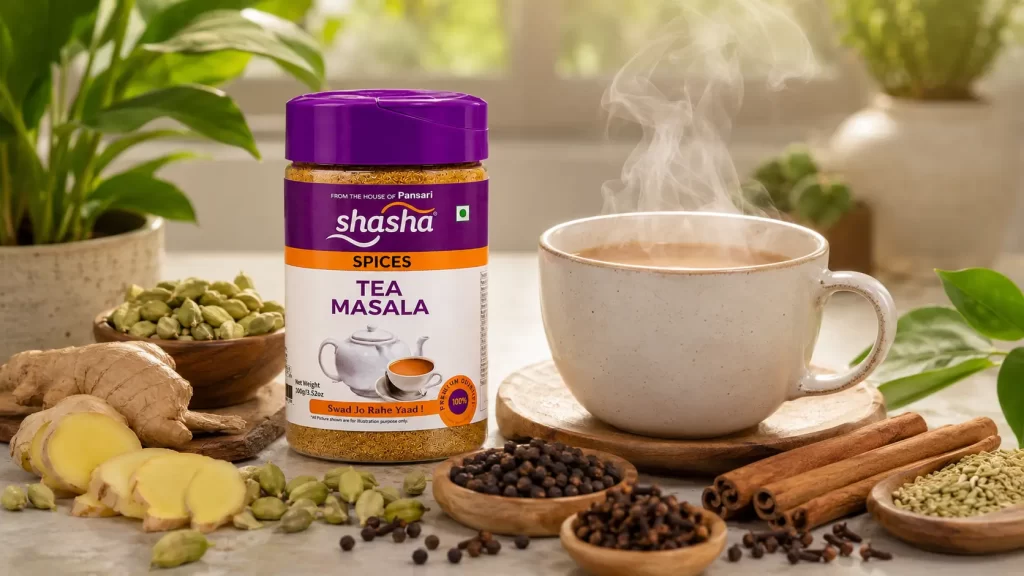
The combination of spices used in masala chai is called chai masala or tea masala. The precise blend varies by region, household, and personal preference. But the following five spices form the universal core.
The Five Core Masala Chai Spices
1. Cardamom (Elaichi)
Cardamom is the backbone of virtually every authentic masala chai recipe. It delivers a floral, slightly citrusy, gently sweet warmth that is immediately recognizable. Green cardamom pods are the standard. Black cardamom — occasionally used in regional northern Indian and Kashmiri blends — provides a smokier, more camphor-like note.
Why it matters in the cup: Cardamom lifts the entire aroma of the tea, giving it that distinctive fragrance that signals masala chai from across the room. Without it, the spice blend tastes flat and generic.
2. Ginger (Adrak)
Fresh ginger or dried ginger powder adds heat, sharpness, and a distinctive clean bite. Fresh ginger produces a brighter, more vibrant flavor. Dried ginger (sonth) is more concentrated and adds warmth with less sharp heat.
Why it matters in the cup: Ginger balances the creaminess of milk with its natural heat. It also supports digestion — ginger contains gingerol, a bioactive compound studied for anti-inflammatory and anti-nausea properties. Many people across India drink masala chai after meals specifically because of ginger’s digestive association.
3. Cinnamon (Dalchini)
Cinnamon contributes sweet, woody warmth that softens the overall spice blend and makes it more approachable. Ceylon cinnamon is subtler and more refined; Cassia cinnamon is bolder and slightly more peppery. Both work well in masala chai, though Ceylon is the more traditional choice.
Why it matters in the cup: Without cinnamon, masala chai can taste sharp and unrounded. Cinnamon acts as the bridge between the boldness of cloves and pepper and the sweetness of milk and sugar.
4. Cloves (Laung)
Cloves are the most potent spice in the chai masala blend. They contain eugenol — a compound responsible for their intense, slightly numbing warmth and rich, almost medicinal aroma. A small quantity goes a very long way.
Why it matters in the cup: Two to three whole cloves per serving is typically sufficient. More than that and cloves will dominate and overpower every other flavor in the cup. Used correctly, they add depth and intensity that no other spice replicates.
5. Black Pepper (Kali Mirch)
Black pepper adds dry, clean heat that is distinctly different from the warming heat of ginger. It sharpens the spice profile and prevents the cup from becoming too sweet or one-dimensional.
Why it matters in the cup: Black pepper contains piperine — a compound that may enhance the bioavailability of other spice compounds in the body. In flavor terms, it gives masala chai its final edge. Even a small amount, just three to four lightly crushed peppercorns, noticeably improves the complexity of the final cup.
Optional and Regional Spices
| Spice | Flavor Contribution | When to Use |
|---|---|---|
| Star Anise (Chakra Phool) | Licorice-like complexity, subtle sweetness | Add one small star to regional or spicy blends |
| Nutmeg (Jaiphal) | Earthy, warm depth | Small pinch in chai masala powder blends |
| Fennel Seeds (Saunf) | Mild, sweet anise note | Complements cardamom; popular in Gujarati-style chai |
| Tulsi (Holy Basil) | Clove-adjacent herbal note | Ayurvedic blends; Tulsi masala chai |
| Saffron | Floral, luxurious depth | Kashmiri-style royal masala chai |
What Spices Are in Chai? — Quick Reference
- Cardamom — always present
- Ginger — always present
- Cinnamon — standard
- Cloves — standard
- Black pepper — standard
- Star anise — regional / optional
- Nutmeg — optional
- Fennel seeds — optional
- Tulsi — Ayurvedic variation
- Saffron — Kashmiri style / special occasion
How to Make Authentic Masala Chai: Step-by-Step Recipe
This recipe produces two generous cups of authentic Indian masala chai using the traditional stovetop simmering method. This is the correct preparation sequence — and the sequence matters more than most beginner guides acknowledge.
Masala Chai Ingredients (Serves 2)
| Ingredient | Quantity |
|---|---|
| Water | 1 cup (240 ml) |
| Whole milk | 1 cup (240 ml) |
| Assam CTC black tea (loose leaf) | 2 teaspoons |
| Fresh ginger, grated or finely sliced | ½ inch piece |
| Green cardamom pods, lightly crushed | 4–5 pods |
| Cinnamon stick | 1 small piece (approximately 1 inch) |
| Whole cloves | 2–3 |
| Black peppercorns, lightly crushed | 3–4 |
| Sugar or jaggery, to taste | 1½ – 2 teaspoons |
Step-by-Step Instructions
Step 1: Prepare your spices.
Lightly crush the cardamom pods and black peppercorns using the flat side of a knife or a mortar and pestle. You’re cracking them open — not grinding them into powder. This releases their essential oils without making the tea gritty.
Step 2: Simmer water with spices first.
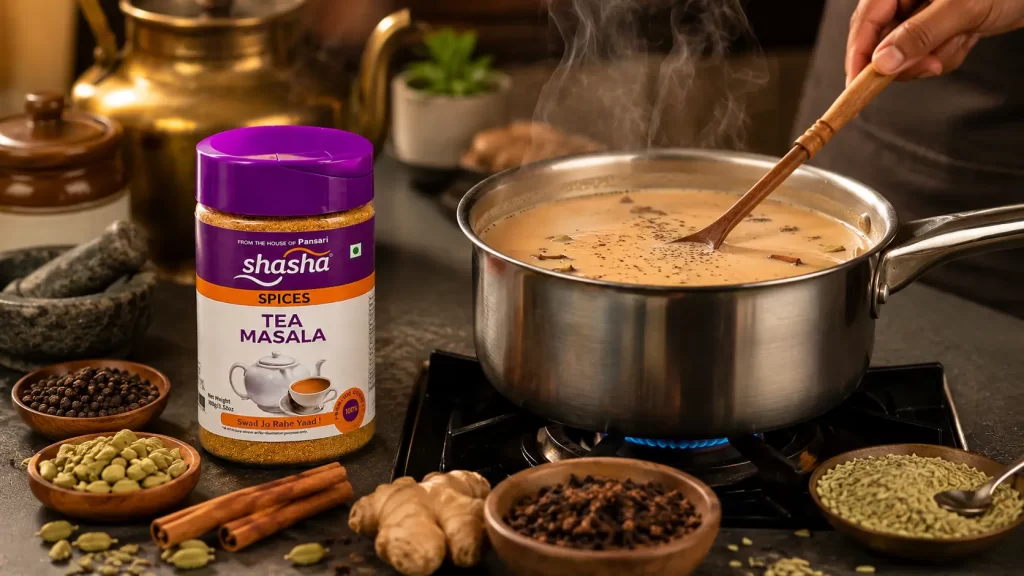
Add 1 cup of water to a small saucepan. Add the crushed cardamom pods, cracked peppercorns, cinnamon stick, whole cloves, and ginger. Bring to a gentle boil over medium heat, then reduce heat slightly and simmer for 2–3 minutes.
This step is the most important in the entire recipe. Simmering spices in plain water — before adding tea or milk — gives the flavors full time to bloom and infuse. Skipping this step is the single most common reason homemade masala chai tastes weak or bland.
Step 3: Add black tea.
Add 2 teaspoons of loose-leaf Assam CTC black tea directly to the simmering spiced water. Stir once and let steep for 1–2 minutes. The water will deepen to a rich reddish-brown color.
Step 4: Add milk.
Pour in 1 cup of whole milk. Stir gently. Increase heat to medium and bring the mixture back to a gentle simmer — not a rolling boil. Watch the pot carefully. Milk rises quickly and can boil over in seconds. Reduce heat as needed and simmer for 2–3 minutes, stirring occasionally.
Step 5: Add sweetener.
Stir in sugar or jaggery to taste. Jaggery — unrefined cane sugar — adds a rich, subtle molasses-like depth that refined white sugar cannot replicate. If you’re using jaggery for the first time, start with 1½ teaspoons and adjust from there.
Step 6: Strain and serve immediately.
Pour the chai through a fine-mesh strainer into your cups. Discard the spent tea leaves and whole spices. Serve hot.
Brewing Adjustments
| Preference | Adjustment |
|---|---|
| Stronger, bolder chai | Increase tea to 2½ teaspoons; simmer 1 additional minute |
| Spicier cup | Add more ginger or 1–2 extra peppercorns |
| Richer, creamier texture | Use a 60% milk to 40% water ratio |
| Less sweet | Use only 1 teaspoon of sugar or skip entirely |
| Dairy-free version | Replace milk with full-fat oat milk or coconut milk |
| Masala chai without milk | Replace all milk with water; add a small squeeze of lemon after straining |
Which Black Tea Is Best for Masala Chai?
The choice of black tea is just as important as the spice blend. A weak tea base will be completely overwhelmed by milk and spices. The tea needs strength, body, and a malty character that can hold its own.
The best choice: Assam CTC (Crush-Tear-Curl) loose leaf black tea.
The CTC processing method creates small, tightly rolled granules that brew fast, brew strong, and produce a deep, malty, full-bodied liquor — precisely what masala chai demands. This is the tea used in the vast majority of authentic Indian households.
Black Tea Options for Masala Chai — Ranked
| Tea Type | Flavor Profile | Suitability |
|---|---|---|
| Assam CTC loose leaf | Bold, malty, strong | ⭐⭐⭐⭐⭐ — Most authentic |
| Assam broken leaf | Slightly subtler, still robust | ⭐⭐⭐⭐ — Excellent |
| Strong breakfast tea bags | Convenient, consistent | ⭐⭐⭐ — Good everyday option |
| Ceylon black tea | Bright, brisk, medium body | ⭐⭐⭐ — Reasonable substitute |
| Darjeeling black tea | Light, floral, delicate | ⭐⭐ — Too delicate for masala chai |
| Green tea | Vegetal, grassy | ❌ — Not appropriate |
| Oolong tea | Complex, semi-oxidized | ❌ — Mismatched flavor profile |
Expert note from Pansari Global: If you can only make one upgrade to your masala chai preparation, switch to Assam CTC loose leaf. The difference in flavor depth over a standard teabag is significant — and immediately noticeable.
How to Make Chai Masala Powder at Home
Chai masala powder is a pre-ground spice blend you prepare once and use for weeks or months. It eliminates the daily prep of crushing whole spices without sacrificing the quality of your masala chai.
Homemade Chai Masala Powder Recipe
Ingredients:
| Spice | Quantity |
|---|---|
| Ground ginger | 2 tablespoons |
| Ground cardamom | 1 tablespoon |
| Ground cinnamon | 1 teaspoon |
| Ground cloves | ½ teaspoon |
| Ground black pepper | ½ teaspoon |
| Ground nutmeg (optional) | ¼ teaspoon |
| Ground star anise (optional) | ¼ teaspoon |
Instructions:
- Combine all ground spices in a small mixing bowl.
- Whisk thoroughly until evenly blended.
- Transfer to an airtight glass jar.
- Label with the date of preparation.
- Store in a cool, dark place — away from heat and sunlight.
Shelf life: 3–4 months at peak potency. After that, the blend doesn’t become unsafe — it just loses aromatic intensity.
How to use it: Add ¼ to ½ teaspoon of chai masala powder per cup during Step 4 of the recipe above (when adding milk). Start with ¼ teaspoon and increase to taste.
Pro tip: For best results, grind your own whole spices rather than buying pre-ground. Whole cardamom pods, whole cloves, and whole cinnamon sticks ground fresh in a spice grinder produce dramatically more vibrant chai masala than pre-ground spices from a jar that has been open for months.
Masala Chai Variations Worth Trying
Once you’ve mastered the base recipe, these variations expand what masala chai can be.
Masala Chai Latte
Use a 3:1 milk-to-water ratio. Brew a small, concentrated amount of spiced black tea with minimal water, then add a large proportion of hot milk — either simmered or frothed separately. This is the home version of the coffeehouse chai latte: richer, creamier, and slightly sweeter than standard masala chai.
Masala Chai Concentrate
Double the quantity of tea leaves and spices and halve the water. Brew without milk. Strain and refrigerate for up to five days in a sealed container. Each morning, combine one part concentrate with one part hot milk. This method is excellent for busy households — it reduces daily preparation to under two minutes.
Masala Chai Without Milk
Replace milk entirely with water. Increase the ginger and cardamom slightly to compensate for the lost creaminess. Strain and serve with a small squeeze of fresh lemon. This is a lighter, more herb-forward expression of masala chai — suitable for those avoiding dairy, those who prefer a less heavy morning drink, or as a digestive option after meals.
Kashmiri Pink Chai (Noon Chai)
A striking regional variant from Kashmir made with green tea leaves, a pinch of baking soda (which causes the distinctive pink color through a chemical reaction with milk), cardamom, and warm spices. Completely different in preparation and appearance from masala chai, but part of the same rich Indian tea culture.
Tulsi Masala Chai
Adds fresh or dried tulsi (holy basil) leaves to the standard masala chai spice blend. Tulsi has a mild, clove-adjacent herbal flavor and is a staple in Ayurvedic wellness traditions. It pairs particularly well with ginger and cardamom.
Garam Masala Chai
Some regional recipes substitute chai masala with a pinch of garam masala — the savory Indian spice blend more commonly used in cooking. The result is a bolder, more complex, slightly savory-edged masala chai. Not everyone loves it, but it’s worth trying once.
Spicy Masala Chai
Doubles the ginger and adds one small dried red chili to the simmering water along with the other spices. For those who love heat in their beverages. Surprisingly good on cold mornings.
Caffeine in Masala Tea: What You Actually Need to Know
Does Masala Chai Have Caffeine?
Yes — masala chai contains caffeine. The caffeine comes entirely from the black tea leaves. The spices (cardamom, ginger, cinnamon, cloves, black pepper) contain no meaningful caffeine on their own.
How Much Caffeine Is in Masala Tea?
The answer depends on four variables:
| Variable | Effect on Caffeine Level |
|---|---|
| Type of black tea used | Assam CTC is generally higher in caffeine than Darjeeling |
| Quantity of tea leaves | More leaves = more caffeine per cup |
| Simmer/steep time | Longer extraction = more caffeine |
| Milk ratio | Milk dilutes the cup volume but does not reduce the caffeine content |
Approximate caffeine content in masala chai:
| Beverage | Caffeine per 8 oz |
|---|---|
| Masala chai (standard recipe) | ~40–70 mg |
| Brewed black coffee | ~80–100 mg |
| Espresso (1 oz shot) | ~63 mg |
| Green tea | ~25–45 mg |
| Herbal tea | 0 mg |
| Masala chai latte (coffeehouse) | ~50–70 mg (varies by brand) |
What this means practically: A cup of masala chai contains roughly half the caffeine of a standard brewed coffee. For most healthy adults, this is a comfortable amount — enough to provide a noticeable energy boost without the intensity or potential anxiety associated with higher-caffeine beverages.
Data reference: Caffeine estimates are based on general tea industry standards. For precise measurements, refer to the USDA FoodData Central database or peer-reviewed research published in the Journal of Food Science.
Masala Tea Caffeine vs. Coffee: Is It a Good Morning Drink?
For many people, yes. The moderate caffeine in masala chai — combined with the small amount of L-theanine naturally present in black tea — may produce a calmer, more sustained alertness than coffee. The milk also slows caffeine absorption slightly. The result for many drinkers is a gentler energy curve without the sharp peak-and-crash pattern associated with strong coffee.
That said, individual responses to caffeine vary significantly. If you are caffeine-sensitive, reduce your steeping time or use a smaller quantity of tea leaves.
Masala Tea Benefits — What the Evidence Says
The potential health benefits of masala tea come from two distinct sources: the black tea base (which contributes polyphenols and antioxidants) and the individual spices in the chai masala blend (each of which has been studied independently).
Critical note: Masala chai is a traditional beverage with centuries of cultural history. While its ingredients have genuine nutritional value and several are the subject of promising research, masala tea should never be treated as a medicine or a treatment for any health condition. The benefits described below reflect general nutritional and pharmacological research — not clinical recommendations.
Benefit 1: Rich Source of Antioxidants
Black tea contains theaflavins and thearubigins — polyphenols formed during the oxidation process that gives black tea its color and body. These compounds have demonstrated antioxidant activity in laboratory and human studies. Cloves, cinnamon, and cardamom are also independently among the most antioxidant-dense foods documented in nutritional research.
What this means for you: Masala chai delivers antioxidants from multiple sources simultaneously — tea and spices — making it a more complex antioxidant source than plain black tea.
Benefit 2: Digestive Support
Ginger and black pepper are two of the most well-researched spices for digestive function. Ginger has been clinically studied for its role in reducing nausea — including morning sickness and chemotherapy-induced nausea — and for stimulating gastric emptying. Black pepper stimulates the production of digestive enzymes. This is why masala chai has been consumed after meals across the Indian subcontinent for generations — not as a folk myth, but as a culturally embedded, evidence-adjacent practice
Benefit 3: Moderate, Sustained Mental Alertness
The caffeine in masala chai’s black tea base promotes wakefulness and concentration. Unlike coffee, black tea also contains L-theanine, an amino acid that modulates the stimulant effect of caffeine — promoting alert calmness rather than jitteriness. The milk in masala chai further slows caffeine absorption, which may contribute to a more gradual energy curve.
Benefit 4: Anti-Inflammatory Properties from Spices
Gingerol (ginger), eugenol (cloves), and cinnamaldehyde (cinnamon) have each been studied in preclinical and some clinical research for anti-inflammatory activity. Regular dietary consumption of these spices — as part of a varied, balanced diet — may contribute to systemic wellness. These are not dramatic, drug-like effects, but they are real and documented at a nutritional level.
Benefit 5: Cardiovascular Research on Black Tea
Epidemiological studies have observed associations between regular black tea consumption and markers of cardiovascular health, including blood pressure and LDL cholesterol. The Harvard T.H. Chan School of Public Health notes that flavonoids in tea may support vascular health. This is promising but not definitive — dietary patterns, genetics, and lifestyle factors all play significant roles.
Benefit 6: Warming Comfort and Psychological Wellbeing
This benefit is straightforward and real. A hot, spiced, sweetened beverage prepared and consumed mindfully contributes to psychological comfort, stress reduction, and the positive rituals of daily life. This is not a trivial benefit — and it is one that masala chai delivers reliably every single time.
What Is Masala Tea Good For? — Summary
| Potential Benefit | Source in Masala Chai | Evidence Level |
|---|---|---|
| Antioxidant activity | Black tea polyphenols + spices | Moderate — laboratory and human studies |
| Digestive support | Ginger, black pepper | Moderate — human clinical studies for ginger |
| Mental alertness | Caffeine + L-theanine (black tea) | Well-established for caffeine; L-theanine effects are variable |
| Anti-inflammatory activity | Gingerol, eugenol, cinnamaldehyde | Preclinical + emerging clinical evidence |
| Cardiovascular markers | Black tea flavonoids | Epidemiological associations — not causal |
| Comfort and wellbeing | The ritual itself | Well-established in behavioral research |
Calories in Masala Tea
Calorie content in masala chai varies primarily based on the amount of milk and sweetener used — the spices and tea leaves contribute negligible calories.
| Masala Chai Preparation | Approximate Calories per 8 oz Cup |
|---|---|
| Standard recipe (whole milk + 2 tsp sugar) | 90–120 calories |
| With 2% milk + 1½ tsp sugar | 60–80 calories |
| With skim milk + 1 tsp sugar | 40–55 calories |
| With unsweetened oat milk + 1 tsp sugar | 50–65 calories |
| Without milk (water-based) + 1 tsp sugar | 15–20 calories |
| Coffeehouse-style chai latte (large) | 150–250 calories |
Note: These are estimates. Actual calorie counts depend on specific ingredient quantities and brands. For precise tracking, use USDA FoodData Central to calculate individual ingredients.
Common Mistakes When Making Masala Chai
These are the most frequent errors — and the ones that explain why homemade masala chai so often disappoints. Fixing even one of these can transform your cup.
Mistake 1: Not simmering the spices in water first.
This is the single most damaging mistake. Adding spices directly with milk or tea leaves doesn’t give the spice compounds time to extract properly. Always simmer whole spices in plain water for 2–3 minutes before anything else is added. This step is non-negotiable in traditional masala chai preparation.
Mistake 2: Using the wrong black tea.
Delicate teas — Darjeeling, white tea, green tea — are completely overwhelmed by bold spices and creamy milk. They’re wonderful teas in their own context, but they don’t belong in masala chai. Use Assam CTC or a strong breakfast tea blend.
Mistake 3: Boiling the milk too aggressively.
A rapid, rolling boil scorches the milk, creates a skin, and produces a flat, slightly burnt undertone. Keep the heat at medium. Aim for a gentle simmer — small bubbles around the edges, not a churning boil. Stir regularly and watch the pot.
Mistake 4: Under-spicing the cup.
Many first-time brewers use too little chai masala out of caution. The result is a watery, barely-spiced cup that disappoints. Don’t be timid. Follow the recommended quantities in the recipe above, taste, and increase from there. Masala chai is supposed to be bold.
Mistake 5: Skipping the sweetener entirely.
Even if you prefer reduced sugar, a small amount of sweetener — as little as ½ teaspoon — rounds out the bitterness of the black tea and sharpens the perception of the spices. Masala chai without any sweetener at all can taste harsh and unbalanced. Jaggery, in particular, adds a warmth that makes the difference between a flat and a memorable cup.
Mistake 6: Using stale or old spices.
Ground spices lose their volatile aromatic oils within 12 months of opening. Whole spices last longer, but they too degrade over time. Old spices produce flat, dull chai regardless of recipe quality. If your cardamom has been sitting in a pantry for two years, it is not the same ingredient as freshly ground cardamom. Replace spices regularly.
Mistake 7: Straining too late.
Leaving the tea leaves and spices in contact with the liquid after simmering — even for an extra minute or two — extracts excess tannins and produces bitter, astringent chai. Strain immediately after the simmering phase is complete.
Mistake 8: Incorrect spice-to-water ratio.
Spice amounts must be adjusted for the quantity of water, not the quantity of milk. If you double the recipe, double the spices relative to the water — because that’s where spice extraction happens.
Expert Insights from Pansari Global
The following insights reflect Pansari Global’s direct experience working with authentic Indian spice sourcing and the Shasha brand’s commitment to traditional spice quality and accessibility for global tea drinkers.
At Shasha, we have worked closely with spice sourcing across India’s major cardamom-growing regions — primarily Kerala in South India and certain highland zones in Gujarat. One consistent finding from this work is that spice freshness is the most underappreciated variable in masala chai preparation — more influential than brand, more influential than specific recipe proportions, and second in importance only to the tea base itself.
The volatile oils in cardamom pods — linalool and 1,8-cineole — are responsible for the characteristic floral, citrusy lift that makes a good masala chai immediately recognizable. These oils begin degrading within weeks of grinding. This is why traditional Indian households, particularly in South India and Kerala, keep whole green cardamom pods and crush them fresh each morning. The difference between fresh-crushed cardamom and six-month-old ground cardamom in a masala chai cup is not subtle.
Regional variation is real and worth understanding. Northern Indian masala chai — particularly the Punjabi style that is perhaps most familiar internationally — tends toward a higher milk ratio, more ginger and cardamom, and a sweeter flavor profile. Gujarati chai often includes fennel seeds, which add a gentle anise sweetness. South Indian spiced tea typically incorporates more black pepper and less sweetener. Nepalese masala tea is frequently made with water buffalo milk, which produces a visibly richer, more deeply colored cup than cow’s milk. None of these is more authentic than the others — they are all genuine expressions of masala chai within their own cultural and geographical contexts.
For everyday convenience, a well-formulated chai masala powder is an excellent alternative to whole fresh spices — provided it is made from high-quality, recently processed ingredients and stored in an airtight container. When evaluating a pre-made chai masala powder, two practical indicators of quality are color vibrancy (dull, faded coloring usually indicates age or inferior raw material) and aroma intensity when the jar is first opened. A genuinely good chai masala powder should smell alive, complex, and identifiable — cardamom forward, with warmth from ginger and pepper in the background.
Frequently Asked Questions
What does tea masala contain?
Tea masala — also called chai masala — is the spice blend used to flavor masala chai. A standard tea masala contains ground cardamom, ground ginger, ground cinnamon, ground cloves, and ground black pepper. Some blends also include star anise, nutmeg, or fennel seeds depending on regional preference. Commercially prepared chai masala powders vary in spice ratio and intensity. Homemade tea masala made from freshly ground whole spices typically delivers more vivid, complex flavor than older pre-packaged versions.
Is tea masala the same as chai?
No — and understanding the distinction removes a lot of confusion. “Chai” refers to the complete beverage: brewed black tea with milk and sweetener. “Tea masala” or “chai masala” refers specifically to the spice blend added to chai to make it masala chai. Tea masala is an ingredient, not a drink. When someone says they’re drinking “masala chai,” they mean chai that has been flavored with that spice blend. Think of tea masala as the seasoning — masala chai is the finished dish.
What are the benefits of drinking tea masala?
The potential benefits of masala chai come from two sources: the black tea base and the spices in the chai masala blend. Ginger may support digestion and reduce nausea — it is one of the better-studied spices in clinical nutrition research. Cinnamon and cloves are exceptionally high in antioxidants. Black pepper contains piperine, which may enhance absorption of other compounds. Black tea polyphenols have been studied for cardiovascular support. These are real nutritional properties — but masala chai is not a treatment for any health condition. Consult a healthcare provider for medical advice.
How do you make your own tea masala?
Making chai masala powder at home is quick and straightforward. Combine 2 tablespoons of ground ginger, 1 tablespoon of ground cardamom, 1 teaspoon of ground cinnamon, ½ teaspoon of ground cloves, and ½ teaspoon of ground black pepper. Whisk thoroughly until the spices are evenly distributed. Transfer to a clean, airtight glass jar. Store away from heat and direct sunlight. Use ¼ to ½ teaspoon per cup of masala chai. Made with fresh spices, this blend stays potent for approximately 3–4 months.
Is it safe to drink masala tea every day?
For most healthy adults, one to two cups of masala chai per day is safe and well-tolerated. The caffeine content is moderate — approximately 40–70 mg per cup, considerably less than brewed coffee. The milk and sugar do contribute daily calories, which is worth being mindful of over time. People with caffeine sensitivity, acid reflux triggered by spices, or specific health conditions should consult a healthcare provider. Pregnant individuals should monitor total daily caffeine intake from all sources, keeping in mind that masala chai contributes a meaningful amount.
What is the healthiest tea to drink daily?
This depends on what “healthy” means for your specific health goals. Green tea is widely cited for its high EGCG antioxidant content and lower caffeine. Black tea — the base of masala chai — provides theaflavins and thearubigins with somewhat higher caffeine. Herbal teas such as ginger, chamomile, or peppermint are naturally caffeine-free. Masala chai uniquely combines the antioxidant value of black tea with multiple culinary spices, each contributing distinct bioactive compounds. For broad nutritional coverage, rotating between green tea, black tea, and herbal infusions is a reasonable approach.
Can diabetics drink chai tea?
People managing diabetes can often enjoy masala chai — but the sweetener is the primary variable to control. Traditional recipes use two teaspoons of sugar per cup, which raises blood glucose. To make masala chai more diabetes-friendly: reduce or eliminate sugar, use an approved sweetener alternative (consult your healthcare provider for recommendations), and choose lower-fat milk if calorie management is also a concern. Cinnamon in chai masala has been studied in preliminary research for potential effects on blood glucose regulation, but it should never substitute for prescribed diabetes treatment. Always consult a qualified healthcare professional for personalized guidance.
Is masala chai high in caffeine?
No — masala chai is considered a moderate-caffeine beverage. A standard 8-ounce cup contains approximately 40–70 milligrams of caffeine, compared to 80–100 mg in a typical brewed coffee. The exact amount varies based on the type and quantity of black tea used, the simmering time, and whether you’re using loose leaf tea or tea bags. If you are caffeine-sensitive, you can reduce your brew time, use slightly less tea, or try a half-caffeinated Assam blend to maintain the authentic flavor with lower caffeine output.
What are some common mistakes when making masala chai?
The most impactful mistakes: not simmering spices in water before adding tea or milk — they need dedicated time to extract properly; using a tea variety that’s too delicate (Darjeeling, green tea) and gets lost under spices and milk; boiling milk too aggressively, which scorches it; using old or stale spices, which produce flat, lifeless chai; under-spicing out of caution; and straining too late, which causes bitterness from excess tannin extraction. Fixing any one of these will noticeably improve your next cup. Fixing all of them will transform it.
Is masala tea healthier than coffee?
Neither is universally “healthier” — both have documented nutritional merits. Masala chai provides roughly half the caffeine of coffee, which is gentler for those caffeine-sensitive. Its spice blend adds antioxidants, ginger for digestion, and piperine from black pepper — nutrients absent from coffee. However, traditional masala chai made with whole milk and sugar is higher in calories than plain black coffee. Coffee has its own compelling body of research, including associations with reduced risk of certain neurological and metabolic conditions. The better choice depends on your specific health goals, caffeine tolerance, and dietary preferences.
What is in a masala chai that makes it spicy?
The spiciness in masala chai comes from three primary sources: ginger, which provides bright, clean heat through its compound gingerol; black pepper, which adds a dry, sharp spiciness through piperine; and cloves, which contribute a deep, slightly numbing intensity through eugenol. Cinnamon and cardamom add warmth without heat in the traditional sense. Together, these five spices create masala chai’s layered flavor — warming and complex rather than fiery or aggressive, and distinct from the sharp heat of chili peppers.
Conclusion
Masala tea is one of the most beloved beverages in the world — and for good reason. It is warming, complex, and deeply satisfying. It provides moderate caffeine, genuine nutritional value from its spice blend, and the kind of ritualistic comfort that makes a morning feel purposeful.
But masala chai rewards attention. The black tea base matters. The spice freshness matters. The simmering sequence matters. Understanding why each element is present — and what role it plays in the final cup — transforms masala chai from a recipe into a practice.
Start with the recipe above. Use Assam CTC loose leaf tea and whole spices if you can. Simmer the spices in water before anything else. Don’t under-spice. Strain immediately. Taste it. Adjust it. Make it yours.
If daily convenience is a priority, a high-quality chai masala powder dissolves this effortlessly. Prepare a batch at home from fresh-ground spices, or choose a thoughtfully sourced pre-made blend. Either way, the essential character of authentic masala chai — that warming, spiced, milky cup that has been brewed across the Indian subcontinent for generations — remains entirely within reach.
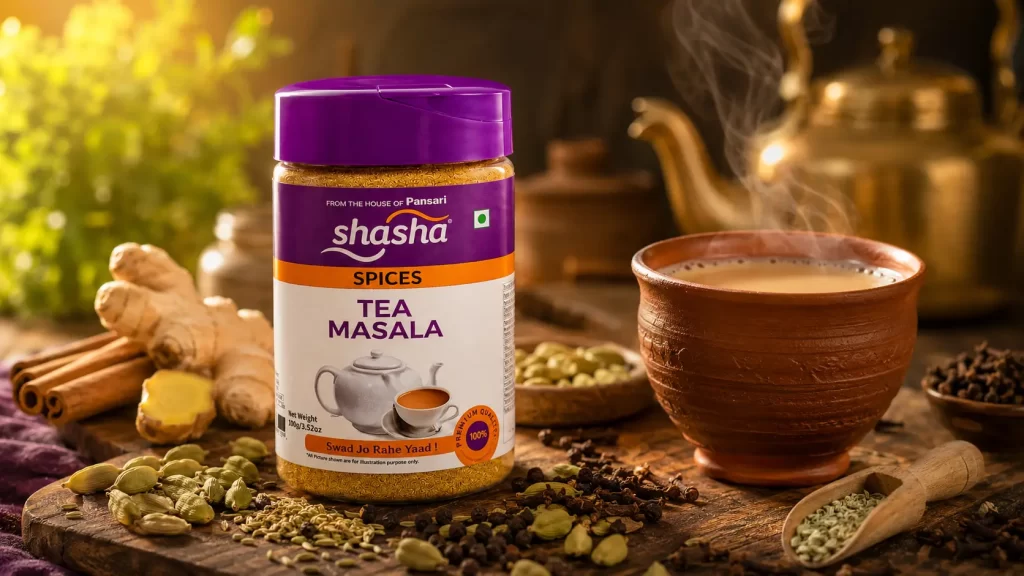
At Shasha by Pansari Global, we believe that quality spices are the foundation of quality masala chai. Explore our Shasha chai masala blend — carefully balanced, freshly processed, and crafted to bring the real taste of Indian spiced tea into your kitchen, every single morning.
If You are Experience Best Tea Masala –
Amazon USA – Click Here
Amazon UK – Click Here
Author: Pansari Global | Brand: Shasha | Published: August 8, 2026