Mint Tea: Benefits, Caffeine, Types, and How to Make It
Mint tea is one of the most widely consumed herbal beverages in the world. Made by steeping fresh or dried mint leaves in hot water, it is naturally caffeine-free when prepared from pure mint, and it is enjoyed across cultures for its refreshing flavor, cooling aroma, and simple preparation.
People drink mint tea for a wide range of reasons — as a soothing after-dinner drink, a caffeine-free alternative to coffee or black tea, a refreshing iced drink, or simply because they enjoy the taste. Some also drink it for digestive comfort, though individual experiences vary.
This article explains what mint tea is, the main types available, its possible benefits, caffeine content, how to make it at home, safety considerations, and what to look for when choosing a mint tea product.
What Is Mint Tea?
Mint tea is a herbal beverage made by infusing the leaves of mint plants in hot water. It is prepared from plants in the Mentha genus, which includes several varieties — the most common being peppermint (Mentha × piperita) and spearmint (Mentha spicata).
The result is an aromatic, flavorful drink with a characteristic cooling sensation, largely due to the presence of menthol in the leaves. Mint tea can be made with fresh leaves, dried leaves, or ready-made tea bags or loose-leaf blends.
Pure mint tea has a refreshing, slightly sweet, and cooling flavor. Its intensity depends on the variety of mint used, the amount of leaves, and the steeping time.
Is Mint Tea a True Tea or an Herbal Tea?
Mint tea is not a true tea. True teas — including black tea, green tea, white tea, and oolong tea — are made from the leaves of the Camellia sinensis plant and naturally contain caffeine.
Mint tea is a herbal infusion, sometimes called a tisane. It is made entirely from mint leaves and contains no Camellia sinensis leaves. As a result, pure mint tea is naturally caffeine-free.
It is worth noting that some commercially blended products labeled as “mint tea” may combine mint with black tea or green tea. These blends do contain caffeine. Always check the ingredient label if caffeine content matters to you.
Types of Mint Tea
Peppermint Tea
Peppermint tea is made from peppermint leaves (Mentha × piperita). Peppermint is a natural hybrid of spearmint and watermint, and it has a notably high menthol content — which gives it its distinct strong, sharp, cooling flavor.
Peppermint tea is one of the most popular herbal teas globally. It is often consumed after meals, as an afternoon drink, or in the evening. When made from pure peppermint leaves with no added tea base, it contains no caffeine.
People commonly drink peppermint tea for its refreshing taste and possible digestive comfort, though individual effects vary.
Precaution: Some people with gastroesophageal reflux disease (GERD) or heartburn may find that peppermint worsens their symptoms. If this applies to you, speak with a healthcare professional before consuming it regularly.
Spearmint Tea
Spearmint tea is made from spearmint leaves (Mentha spicata). Spearmint has a milder, sweeter flavor compared to peppermint, with a lower menthol content. Many people who find peppermint too intense prefer spearmint for its gentler, more approachable taste.
Like peppermint tea, pure spearmint tea is caffeine-free. It is a good option for those who want a lighter mint flavor.
Fresh Mint Tea
Fresh mint tea is made by steeping whole, freshly picked mint leaves directly in hot water. It produces a bright, clean, and vibrant flavor. The intensity depends on the amount of leaves used and how long they steep.
Fresh mint leaves are widely available in grocery stores, markets, and home gardens. They should be rinsed thoroughly before use and stored in the refrigerator in a slightly damp wrap or upright in water, like fresh herbs.
Dried Mint Tea
Dried mint tea is made from mint leaves that have been dried and sometimes crushed. The drying process concentrates the flavor, which means dried mint can produce a stronger infusion than fresh leaves, even in smaller quantities.
Dried mint is widely used in Middle Eastern, North African, and Mediterranean cultures as a staple tea ingredient. It is convenient, has a longer shelf life than fresh mint, and is easy to prepare.
Dried mint should be stored in an airtight container in a cool, dark location away from moisture.
Potential Benefits of Mint Tea
Mint tea can be a pleasant, naturally caffeine-free herbal beverage. It is enjoyed around the world for its flavor and aroma, and many people include it in their routines for a variety of reasons. The following possible benefits reflect traditional use and general observations. Mint tea is not a medical treatment, and its effects can vary from person to person.
May Support Digestive Comfort
Mint has a long history of traditional use for digestive discomfort, including gas, bloating, and stomach unease. Some people find that drinking a warm cup of mint tea after a meal feels soothing.
It is important to note that most of this is based on traditional use and general observations. Peppermint oil has been studied in some clinical contexts — particularly for irritable bowel syndrome — but drinking homemade mint tea is not equivalent to a standardized supplement or medication. Effects can vary significantly between individuals.
If you experience persistent or severe digestive symptoms, consult a qualified healthcare professional.
May Help You Feel Refreshed
The menthol in mint leaves creates a cooling sensation that many people find mentally refreshing. The aroma of mint is distinctive and pleasant, and some people report feeling more alert or awake after drinking it.
This is not a medical claim — it is simply one of the reasons mint tea is popular as a morning or afternoon drink.
May Contribute to Fluid Intake
Drinking mint tea contributes to your overall daily fluid intake. It can be consumed hot or cold, making it a versatile beverage throughout the year. It is not more hydrating than water, but it can be a flavorful and enjoyable way to stay hydrated.
May Be Useful as a Caffeine-Free Beverage
For people who are reducing their caffeine intake, avoiding coffee, or looking for an evening drink that will not interfere with sleep, pure mint tea can be a useful option. It provides a flavorful, warm beverage without the stimulant effects of caffeine.
If you purchase a blended product, always check the ingredient list to confirm whether caffeine-containing ingredients such as black tea or green tea are included.
May Support a Relaxing Routine
Many people include a warm cup of herbal tea as part of a winding-down routine in the evening. Warm beverages are commonly associated with relaxation, and mint tea is a popular choice for this purpose.
This is not a claim that mint tea treats anxiety, insomnia, or stress-related conditions. Individual routines and experiences differ.
Does Mint Tea Have Caffeine?
Pure mint tea does not contain caffeine. When mint tea is made entirely from mint leaves — whether peppermint, spearmint, or another variety — it is a naturally caffeine-free herbal infusion.
However, not all products sold as “mint tea” are purely made from mint. Some products blend mint with black tea or green tea, both of which contain caffeine. A mint-flavored or mint-blended tea is not the same as a pure mint herbal infusion.
Always read the ingredient label before purchasing, especially if you are sensitive to caffeine or are avoiding it for health, lifestyle, or religious reasons.
| Beverage | Usually Contains Caffeine? |
|---|---|
| Pure mint herbal tea | No |
| Pure peppermint infusion | No |
| Pure spearmint infusion | No |
| Black tea with mint | Yes |
| Green tea with mint | Yes |
| Herbal mint blend | Depends on ingredients |
Mint Tea vs. Peppermint Tea vs. Spearmint Tea
“Mint tea” is a broad, general term that can refer to any tea made from mint leaves. “Peppermint tea” and “spearmint tea” are specific varieties within that category.
| Feature | Mint Tea | Peppermint Tea | Spearmint Tea |
|---|---|---|---|
| Meaning | General category | Specific mint variety | Specific mint variety |
| Flavor | Varies by type | Strong, sharp, cooling | Milder, sweeter |
| Caffeine | Usually none when pure | None when pure | None when pure |
| Main ingredient | Mint leaves (type varies) | Peppermint leaves | Spearmint leaves |
| Menthol content | Varies | High | Low to moderate |
| Best use | General herbal drink | Strong mint flavor preference | Mild mint flavor preference |
Taste preference is personal. Some people prefer the intensity of peppermint, while others find spearmint more approachable. Individual tolerance to each variety can also differ.
How to Make Mint Tea with Fresh Mint Leaves
Making mint tea at home with fresh mint leaves is simple and requires no special equipment.
Ingredients
- 1 small handful of fresh mint leaves (approximately 8–12 leaves for a single cup)
- 1–2 cups of hot water
- Honey, lemon, or ginger (optional)
Instructions
- Rinse the mint leaves thoroughly under clean, running water to remove any dirt or residue.
- Gently bruise or lightly tear the leaves. This helps release the natural oils and aroma.
- Place the mint leaves in a cup, mug, or small teapot.
- Pour hot water over the leaves. Water that is just off the boil works well — approximately 90–100°C (195–212°F).
- Cover the cup or teapot with a small plate or lid to keep the steam and aroma inside.
- Steep for approximately 5–10 minutes. A shorter steep produces a lighter flavor; a longer steep produces a stronger one.
- Strain out the leaves using a fine strainer or remove the leaves if using a teapot with a built-in filter.
- Add honey, lemon, or fresh ginger if desired.
- Serve immediately as a hot drink, or allow to cool and pour over ice for iced mint tea.
Practical tips:
- Adjust the number of leaves based on how strong you prefer your tea.
- Use clean, safe drinking water.
- Use mint leaves from a trusted, clean source — particularly important if using homegrown or market-bought fresh mint.
- A stronger brew does not necessarily provide greater health benefits. Adjust based on taste, not assumed potency.

How to Make Mint Tea with Dried Mint
Dried mint is a convenient and widely available alternative to fresh leaves. The flavor is often more concentrated, so you generally need less dried mint than fresh.
Approximate starting point: 1–2 teaspoons of dried mint per cup of hot water.
Instructions
- Measure approximately 1–2 teaspoons of dried mint into a cup, mug, or teapot.
- Pour hot water over the dried mint.
- Cover and steep for approximately 5–7 minutes. Dried mint can become bitter if steeped too long.
- Strain the tea using a fine mesh strainer or tea infuser.
- Adjust the amount of dried mint in future cups to match your preferred strength.
- Add honey or lemon if desired.
Key differences from fresh mint tea:
Dried mint produces a slightly earthier, more concentrated flavor. Fresh mint tends to taste brighter and lighter. Both are valid preparations — the choice depends on what you have available and your flavor preference.
Store unused dried mint in an airtight container in a cool, dark place away from moisture and direct light. Well-stored dried mint can remain flavorful for several months, though you should check its aroma before use.
Mint Tea Recipe Variations
Mint Tea with Lemon
Add a squeeze of fresh lemon juice to your brewed mint tea after removing the leaves. Lemon adds a bright, citrusy contrast to the cooling mint flavor. It is a simple combination that works well both hot and cold.
Mint Tea with Honey
A small amount of honey softens the sharpness of mint and adds gentle sweetness. Keep in mind that honey adds calories and sugar. Those managing their sugar intake should use it in moderation.
Mint Tea with Ginger
Add a few thin slices of fresh ginger to your cup before pouring in hot water, alongside the mint leaves. Ginger brings warmth and a slight spice that pairs naturally with mint. Ginger has its own traditional associations with digestive comfort, but no specific health claims are made here. The combination simply creates a flavorful, warming drink.
Iced Mint Tea
Brew a slightly stronger batch of mint tea using more leaves or a longer steeping time. Allow it to cool to room temperature, then pour it over ice. You can add lemon slices or a sprig of fresh mint for presentation. Iced mint tea is a refreshing drink in warm weather and works equally well with fresh or dried mint.
Mint Tea with Green Tea
Adding green tea leaves or a green tea bag to your mint infusion creates a blended beverage with both mint flavor and the characteristic notes of green tea. This combination does contain caffeine from the green tea. It is a suitable option for those who enjoy the flavor of mint alongside a mild caffeine boost — but it is no longer caffeine-free.
Is Mint Tea Good for Digestion?
Mint tea is traditionally associated with digestive comfort, and many people drink it after meals for this purpose. However, its effects can vary from person to person, and it is not a treatment for digestive conditions.
Mint has been used for centuries across many cultures to ease feelings of fullness, gas, and stomach discomfort. Some people find that a warm cup after eating feels soothing and helps them feel more comfortable.
It is worth distinguishing between different forms of mint. Peppermint oil, used in standardized enteric-coated capsules, has been studied in some clinical contexts. Drinking a homemade cup of mint tea is a different preparation with different concentrations and effects. Treating them as equivalent is not accurate.
Key considerations:
- Gas and bloating: Some people find mint tea helpful, but results vary.
- Stomach discomfort: Warm herbal teas are generally soothing for mild discomfort.
- After-meal use: Many people drink mint tea after eating as a pleasant, calming habit.
- Individual tolerance: Not everyone responds the same way.
- Acid reflux and heartburn: Mint may relax the lower esophageal sphincter, which can worsen reflux symptoms in some people. If you have GERD or frequent heartburn, approach mint tea cautiously and speak with a healthcare professional.
If you have persistent, recurring, or severe digestive issues, consult a qualified healthcare provider. Mint tea is not a substitute for medical evaluation or treatment.
Can You Drink Mint Tea Every Day?
Many adults can enjoy moderate amounts of pure mint tea as part of a regular routine without any known concerns. However, the appropriate amount varies by individual, and more is not always better.
Mint tea is generally well-tolerated by most healthy adults when consumed in reasonable quantities. A cup or two per day is common for people who enjoy it regularly.
That said, individual responses differ. Some people may notice digestive sensitivity, heartburn, or other mild effects, particularly at higher quantities. If you notice any discomfort, reduce the amount or discontinue use and consider speaking with a healthcare professional.
Specific groups who should exercise caution:
- People with acid reflux or GERD
- People with known mint or menthol allergies
- Pregnant or breastfeeding individuals (see the Precautions section)
- Children, particularly with concentrated herbal products
- People taking medications that may interact with herbal preparations
There is no universally recommended daily amount for mint tea. Listen to your body, monitor your tolerance, and seek professional advice if you have any relevant health conditions.
Possible Side Effects and Precautions
Mint tea is generally safe for most adults when consumed in reasonable amounts. However, there are some situations where caution is appropriate.
Heartburn and acid reflux: Mint — particularly peppermint — can relax the lower esophageal sphincter, potentially worsening reflux symptoms in people who are prone to them. If you experience increased heartburn after drinking mint tea, discontinue use and consult a healthcare professional.
Stomach discomfort: Some people may experience mild stomach sensitivity, particularly with large amounts of strong mint tea.
Allergic reactions: Allergies to mint or plants in the Lamiaceae family (which includes mint, basil, lavender, and others) are possible, though uncommon. If you notice any signs of an allergic reaction — including itching, swelling, rash, or difficulty breathing — stop use and seek medical attention immediately.
Individual sensitivity: Everyone responds differently to herbal products. Start with smaller amounts and observe how your body responds.
Pregnancy and breastfeeding: The safety of large or concentrated amounts of peppermint during pregnancy and breastfeeding is not definitively established. Occasional amounts may be acceptable for some individuals, but it is always advisable to consult a qualified healthcare professional before consuming herbal products regularly during pregnancy or while breastfeeding.
Children: Children, especially infants and young children, should not consume concentrated peppermint preparations. For older children, caution is advised, and guidance from a healthcare professional is recommended.
Medication interactions: If you take prescription medications, speak with a healthcare professional before regularly consuming herbal teas, including mint tea. Certain herbs may interact with some medications, though mint tea at ordinary consumption levels is generally not considered high-risk.
Tea versus concentrated extracts: There is an important difference between drinking regular mint tea and consuming concentrated peppermint extracts, oils, or supplements. This article discusses ordinary mint tea, not concentrated preparations, which should be approached with additional caution.
Is Mint Tea Good for Weight Loss?
Mint tea is not a proven weight-loss treatment and should not be presented as one.
Unsweetened mint tea is a very low-calorie beverage. If you are currently drinking sugary sodas, juice, or sweetened coffee and replace some of those drinks with unsweetened mint tea, you may reduce your overall calorie intake — which can contribute to weight management as part of a broader lifestyle approach.
However, mint tea does not burn fat, speed up metabolism in a clinically meaningful way, or cause weight loss on its own. There is no strong clinical evidence to support the idea that drinking mint tea directly causes weight loss.
When you add honey, sugar, or other sweeteners to mint tea, it also gains calories. A heavily sweetened cup of mint tea is no longer a low-calorie drink.
Weight management depends on overall dietary habits, physical activity, sleep, stress, and individual health factors. Mint tea can be a pleasant part of a balanced routine, but it is not a shortcut or substitute for sustainable lifestyle choices.
What Is the Best Time to Drink Mint Tea?
There is no single universally proven best time to drink mint tea. Personal preference, routine, and individual tolerance are the most important factors.
Here is how different times of day are commonly used by mint tea drinkers:
Morning: Some people enjoy mint tea in the morning as a refreshing start to the day, particularly as a caffeine-free alternative to coffee. Its cooling aroma can feel invigorating.
After meals: Many people drink mint tea after lunch or dinner, particularly for the feeling of digestive comfort it may provide. This is one of the most common traditional uses across many cultures.
Afternoon: Mint tea works well as a midday refreshment, especially when served iced in warm weather.
Evening: Since pure mint tea is caffeine-free, it can be a suitable evening drink for those who want to avoid caffeine later in the day. Many people include it as part of a winding-down routine.
On an empty stomach: Some people drink mint tea in the morning before eating. This is generally fine for most people, but those with acid reflux or stomach sensitivity may find that mint on an empty stomach worsens their symptoms. If this applies to you, drinking mint tea after meals may be a better approach.
Ultimately, drink mint tea when it fits your routine and when it feels comfortable for your body.
How to Choose a Good Mint Tea
When selecting a mint tea product, the ingredient list is the most important place to start. Here is what to consider:
Check the ingredient list:
A pure mint herbal tea should list mint — peppermint or spearmint — as the primary or sole ingredient. A longer ingredient list may indicate blending with other herbs, tea bases, or flavoring agents. This is not necessarily a negative thing, but it is important to know what you are purchasing.
Pure mint versus blended mint tea:
If you want a caffeine-free product, confirm that no black tea, green tea, or other caffeinated ingredients are included. Mint-flavored teas are not always the same as pure mint herbal infusions.
Aroma and freshness:
High-quality dried mint tea should have a noticeable, fresh mint aroma when the packaging is opened. A faint or stale aroma may indicate that the product is old or has been stored improperly.
Packaging and storage instructions:
Look for products with clear packaging that protects the tea from moisture, light, and air. The product should include storage instructions.
Preparation instructions:
A quality product should include clear steeping time and water temperature guidance.
Additives and flavoring:
Some products contain artificial flavors, coloring, or added sugars. If you prefer a clean, simple mint tea, look for a product with minimal added ingredients.
Brand transparency:
Choose a brand that clearly communicates what the product contains, how it is made, and how to use it.
Recommended Mint Tea Option
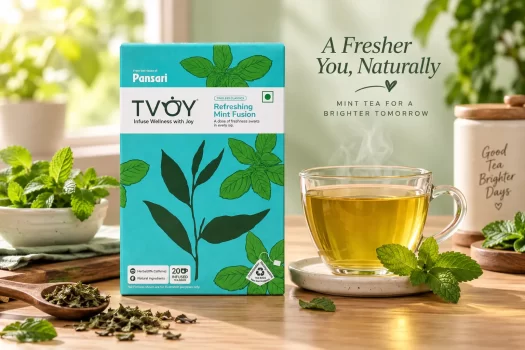
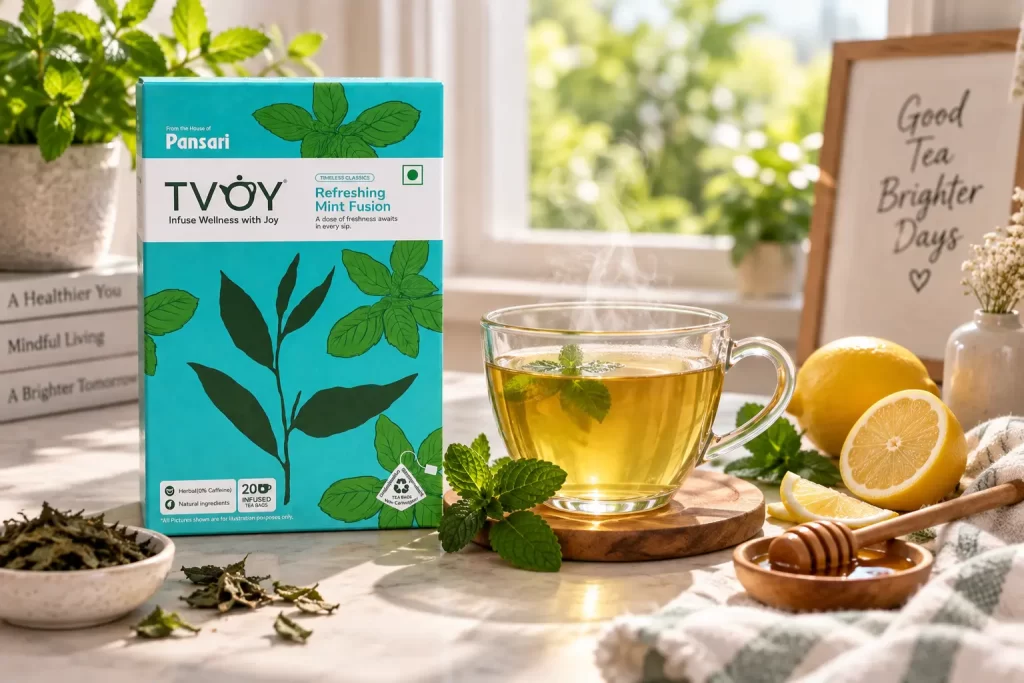
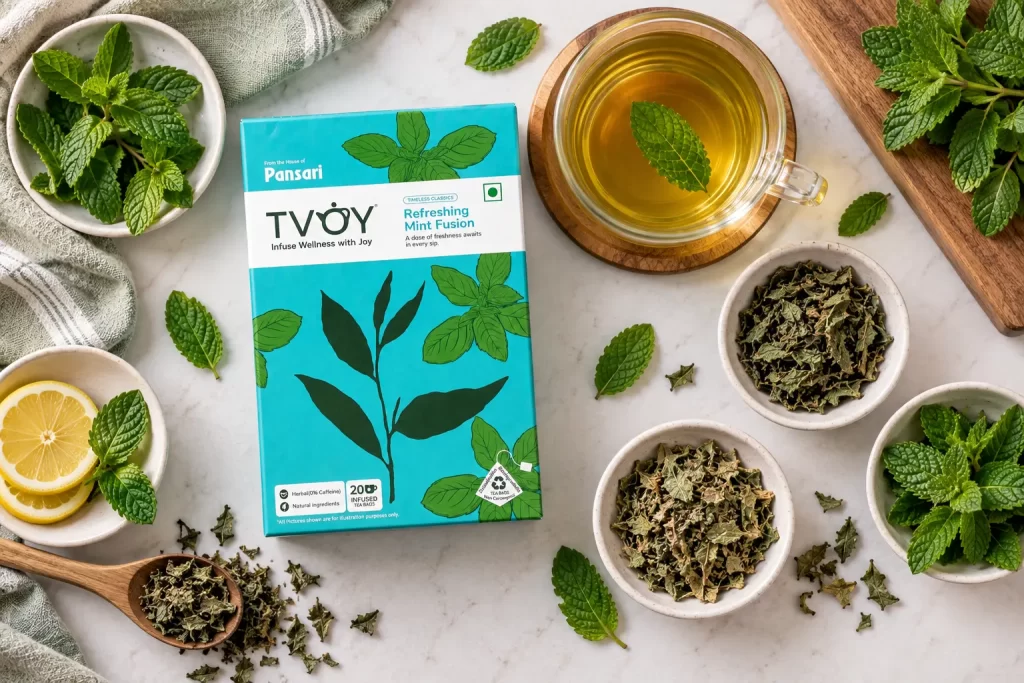
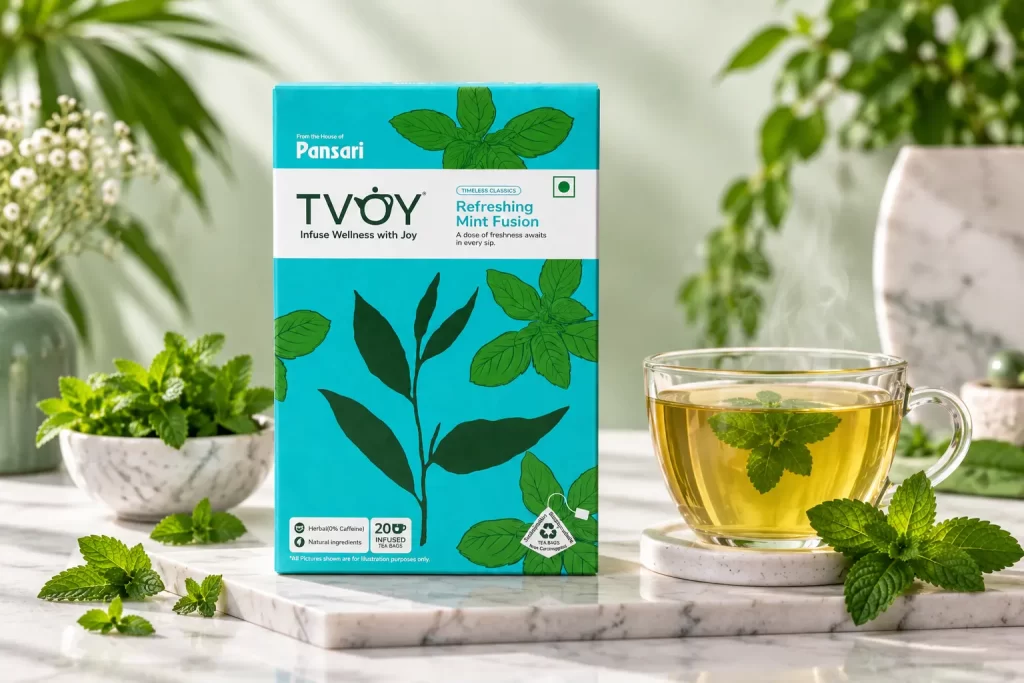
If you are looking for a mint tea product to try, TVOY Mint Fusion Tea may be worth considering. Before purchasing, review the product’s ingredient list, preparation instructions, and official product description to confirm it meets your requirements. As with any food or beverage product, check for any ingredients that are relevant to your personal dietary needs or sensitivities.
If You Experience Best Mint Tea :
Amazon USA – https://amzn.to/4yA41yM
Amazon UK – https://amzn.to/3Rww4iE
How to Store Fresh and Dried Mint
Fresh Mint
Fresh mint leaves have a relatively short shelf life and require proper storage to stay usable.
- Refrigerate: Store fresh mint in the refrigerator.
- Moisture control: Wrap the leaves loosely in a slightly damp paper towel or cloth and place them in a sealed bag or container. Alternatively, place the stems upright in a glass with a small amount of water, cover loosely with a bag, and refrigerate.
- Duration: Properly stored fresh mint typically stays usable for up to one to two weeks.
- Signs of spoilage: Discard any leaves that are wilted, slimy, discolored, or have an off smell.
Dried Mint
Dried mint stores significantly longer than fresh mint when handled correctly.
- Airtight container: Store dried mint in an airtight glass or food-grade container.
- Cool and dark: Keep the container in a cool, dark location — away from direct sunlight, heat sources, and steam.
- Avoid moisture: Moisture degrades dried herbs quickly. Keep the container sealed and dry.
- Check freshness: Before using dried mint, check its aroma. A strong, clear mint scent indicates good quality. A faint, dusty, or stale smell suggests the mint has lost much of its potency and is best replaced.
- Duration: Well-stored dried mint can remain flavorful for six months to a year or longer, though quality diminishes over time.
Common Mistakes When Making Mint Tea
Even a simple preparation like mint tea can go wrong. Here are common mistakes to avoid:
Using too many leaves: A small handful of fresh mint is usually enough for one cup. Using excessive amounts can make the tea overwhelmingly strong and potentially bitter.
Steeping for too long: Particularly with dried mint, over-steeping can make the tea taste harsh or bitter. Start with five to seven minutes and adjust.
Using unsafe or contaminated leaves: Always rinse fresh mint thoroughly. If you grow mint in a garden, be aware of any pesticide or chemical use. Use clean, safe mint from a reliable source.
Not checking blended-tea ingredients: If you care about caffeine content, always read the label. Not all products sold as “mint tea” are caffeine-free.
Adding excessive sugar or sweetener: Heavily sweetened mint tea negates many of the reasons people choose it as a simple, light beverage. Use sweeteners in moderation.
Assuming a stronger brew is healthier: Strength of flavor does not equal greater health benefit. Brew to taste, not to maximize potency.
Treating mint tea as a medical treatment: Mint tea is an herbal beverage with a pleasant flavor and some traditional associations with comfort. It is not a treatment or cure for any condition.
Ignoring reflux symptoms: If you experience heartburn or worsened reflux after drinking mint tea, pay attention to that signal and adjust your consumption accordingly.
Storing mint incorrectly: Mint — both fresh and dried — degrades quickly without proper storage. Follow the storage guidelines above to maintain freshness and flavor.
Conclusion
Mint tea is a naturally caffeine-free herbal beverage enjoyed by people around the world. Whether you prefer peppermint for its bold, cooling intensity, spearmint for its milder sweetness, or a simple fresh mint infusion brewed at home, mint tea is a versatile and accessible drink.
Its possible benefits — including digestive comfort, refreshment, and contribution to daily fluid intake — are best understood as supportive rather than medicinal. Individual responses vary, and mint tea is not a treatment for any condition. For people with reflux, heartburn, allergies, or other health concerns, appropriate caution and professional guidance are advisable.
Making mint tea at home is straightforward. Fresh or dried mint leaves, hot water, and a few minutes of steeping are all you need. Simple additions like lemon, honey, or ginger can add variety without complexity.
When choosing a mint tea product, the ingredient list is your most useful tool. Look for transparency, clear preparation instructions, appropriate packaging, and a product that matches your specific needs.
If you are exploring mint tea options, TVOY Mint Fusion Tea may be worth checking out. Review the official product information — including the ingredient list and preparation guidance — to determine whether it suits your preferences.
Mint tea does not require complicated preparation or elaborate rituals. It is a simple, pleasant drink that fits naturally into a wide range of routines — whether served hot in the morning, iced on a warm afternoon, or quietly enjoyed in the evening.
FAQ
What Are the Benefits of Mint Tea?
Mint tea may offer several benefits, including possible digestive comfort, a refreshing flavor, contribution to daily fluid intake, and a naturally caffeine-free beverage option. Many people drink it after meals or as part of a calming evening routine. It is important to note that mint tea is not a medical treatment — its effects vary by individual, and most benefits reflect traditional use rather than conclusive clinical evidence. If you have specific health concerns, speak with a healthcare professional.
Does Mint Tea Have Caffeine?
Pure mint tea — made entirely from mint leaves such as peppermint or spearmint — does not contain caffeine. It is a naturally caffeine-free herbal infusion. However, some products blend mint with black tea or green tea, which do contain caffeine. A mint-flavored or mint-blended tea is not the same as a pure mint herbal infusion. Always check the ingredient label if caffeine content is relevant to you.
Is Mint Tea Good for Digestion?
Mint tea is traditionally associated with digestive comfort, and many people drink it after meals to ease feelings of fullness, gas, or mild stomach discomfort. Some people find it genuinely soothing. However, effects vary from person to person, and mint tea is not a treatment for digestive conditions. Additionally, people with acid reflux or GERD should be cautious, as mint may worsen reflux symptoms in some individuals. For persistent digestive issues, consult a healthcare professional.
How Do You Make Mint Tea with Fresh Mint Leaves?
Rinse a small handful of fresh mint leaves (approximately 8–12 leaves) thoroughly. Gently bruise or tear the leaves to help release the oils. Place them in a cup or teapot and pour hot water over them. Cover and steep for 5–10 minutes, depending on your preferred strength. Strain the leaves and serve. You can add honey, lemon, or ginger if desired. For iced mint tea, allow the brew to cool and pour it over ice.
What Is the Difference Between Mint Tea and Peppermint Tea?
“Mint tea” is a broad general term for any herbal tea made from mint leaves. “Peppermint tea” is a specific type of mint tea made from peppermint leaves (Mentha × piperita), which has a high menthol content and a strong, sharp, cooling flavor. “Spearmint tea” is another specific type, made from spearmint leaves, with a milder and sweeter flavor. All three are naturally caffeine-free when made from pure mint leaves without added tea bases.
Is Peppermint Tea Good for You?
Peppermint tea is a naturally caffeine-free herbal beverage that many people enjoy for its refreshing flavor and possible digestive comfort. It contributes to daily fluid intake and can be a pleasant alternative to caffeinated drinks. However, peppermint tea is not a cure or treatment for any condition. Some people with acid reflux or GERD may find that peppermint worsens their symptoms. Individuals with relevant health concerns should consult a healthcare professional before consuming it regularly.
Can You Drink Mint Tea Every Day?
Many healthy adults can drink moderate amounts of pure mint tea daily without known concerns. A cup or two per day is a common routine for regular mint tea drinkers. However, individual tolerance varies. People with acid reflux, mint allergies, relevant health conditions, or those who are pregnant, breastfeeding, or taking medications should seek professional guidance. There is no universally recommended daily amount — listen to your body and adjust accordingly.
What Are the Side Effects of Mint Tea?
Mint tea is generally well-tolerated, but some people may experience side effects. These can include worsened heartburn or acid reflux, particularly in people prone to GERD, as mint may relax the lower esophageal sphincter. Mild stomach discomfort is possible in some individuals. Allergic reactions to mint are uncommon but possible. Pregnant and breastfeeding individuals should exercise caution with large or concentrated amounts. Children — especially infants — should avoid concentrated peppermint preparations. If you notice any adverse effects, reduce consumption and consult a healthcare professional.
Is Mint Tea Good for Weight Loss?
Mint tea is not a proven weight-loss treatment. Unsweetened mint tea is very low in calories and can be a useful substitute for higher-calorie drinks like sugary sodas or sweetened coffee. However, it does not burn fat or directly cause weight loss. Adding honey, sugar, or other sweeteners increases its calorie content. Weight management depends on overall lifestyle factors, including diet, physical activity, and individual health. Mint tea can be a pleasant part of a balanced routine, but it is not a weight-loss solution.
What Is the Best Time to Drink Mint Tea?
There is no single universally best time to drink mint tea. Many people enjoy it after meals for possible digestive comfort. Others prefer it in the morning as a refreshing, caffeine-free start to the day, in the afternoon as a light beverage, or in the evening as part of a relaxing routine. People with acid reflux may find drinking it on an empty stomach uncomfortable and may prefer consuming it after food. Personal routine, preference, and individual tolerance are the most relevant factors.